Science background and long-term practice
China Daily reported that Li holds a doctorate in theoretical physics, began science communication in 2009, worked as a medical physicist, and founded Sheldon Science Comic Studio in 2017.
Evidence-led profile · reviewed 20 September 2026
A science-trained founder, a specialist illustration team, and a growing children's publishing portfolio with strong category-level traction in China.

The strongest case comes from a consistent career narrative, independent national media coverage, sustained output, and documented professional recognition. Some headline claims still rely on publisher materials.
China Daily reported that Li holds a doctorate in theoretical physics, began science communication in 2009, worked as a medical physicist, and founded Sheldon Science Comic Studio in 2017.
The same 2021 profile recorded 1.43 million Sina Weibo followers and more than 10 million views for the team's rapid-response comic explaining the 2018 Nobel Prize in medicine.
Three New Technology Arrives volumes have 2022 certificates naming them recommended information-and-communications science titles, issued by a committee of the China Institute of Communications.
The supplied decks name Zhejiang University as his doctoral institution and list Wenjin, China Good Book, and national science-popularization honors. The dossier does not include a complete primary record for every claim.
The operating model is compact: Li owns scientific research and scripts, while an art lead and illustration collective convert the material into a distinctive comic language. External specialists are brought in for subject review.
Topic selection, literature review, scientific framing, story structure, and scriptwriting. The supplied materials also credit him with translations and a popular quantum mechanics course.
Co-author and visual lead. Publisher materials describe formal art training in China and France and identify her as a central creator of the animal-science titles.
A recurring illustration collective responsible for the playful characters, visual explanations, and consistent cross-series look.
The materials identify zoologist Zhang Jinshuo for Animal Big Bang, 18 academic readers for Physics Big Bang, and specialist reviewers across physics, AI, space, communications, chemistry, and science history.

The evidence supports a high-traction specialist brand in children's science publishing. It does not yet prove broad household-name status across the general population.

Sina Weibo followers reported in 2021.Independent: China Daily profile
Views for one 2018 Nobel Prize explainer.Independent: China Daily profile
A supplied retailer screenshot places New Technology Arrives first on Dangdang's seven-day children's new-book chart in its 2021 launch period.Documented screenshot; historical, not a live ranking
Claimed cumulative volume for New Technology Arrives, stated as 210,000 sets.Publisher-reported; not independently audited in this review
The archive shows an expanding catalogue from animal and frontier-technology comics to physics, chemistry, calculus, inventions, carbon neutrality, and a 2025 science-history title.Verified from the supplied product archive
The brand has moved beyond a one-book success: it has repeatable formats, multiple publishers, continued releases, retailer visibility, media coverage, and live reader events.
No live 2026 sell-through feed, audited lifetime sales statement, or current social-platform dashboard was included. The dossier's “100 million reads” and several award labels remain promotional claims.
The supplied materials cover 11 product families and 46 named titles or topic books, showing a repeatable publishing system rather than a single campaign.
A concise buyer-facing map of every series and named product found in the supplied archive.
Reading note: English names are descriptive translations of the Chinese source files. Set structure follows the supplied product briefs; individual retail availability varies by series.

Animal survival strategies presented through character-led science comics.


A comic-led animal science title built around unusual body adaptations.


The archive cover artwork shows twelve numbered topic books across the two editions. One product-deck description gives a different Foundations volume count; the directory follows the pictured numbered titles.

Climate science and the carbon-neutral transition explained in comics.

The supplied product brief presents these four books as a boxed set and states that they are not sold separately.


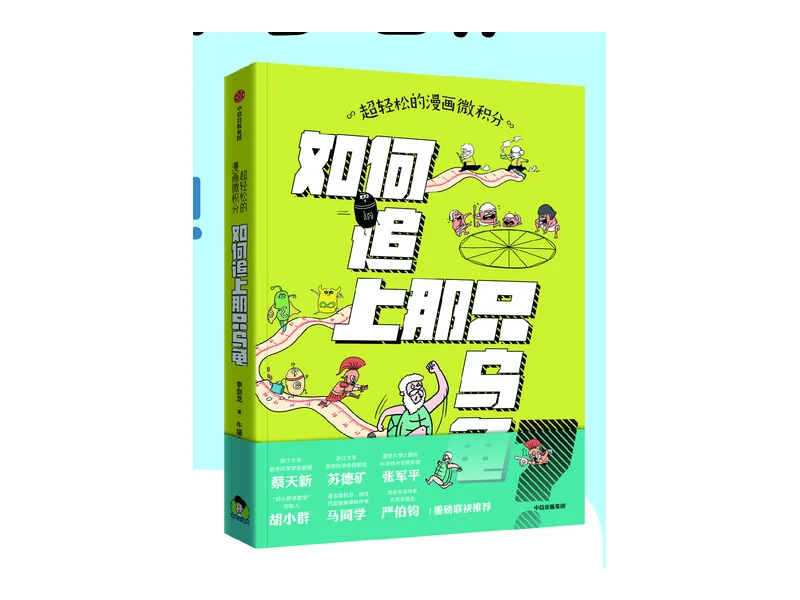
A calculus comic built around a classic motion paradox.

The latest dated product evidence in the archive runs through October 2025.